About three years ago I decided to start looking at bumblebees, thinking it would not be hard, but I then found in the UK alone we have 24 species, (We used to have 26 but two are now extinct), 8 are quite common, one, the Great yellow Bumblebee can only be found on the north coast of Scotland.
I joined the Bumblebee Conservation Trust, which was established because of serious concerns that Bee populations had crashed, given the fact that bumblebees pollinate our crops and wildflowers this should be a concern to all of us.
I quickly learnt via the BBCT, how to identify Bumblebees,

White-tailed Bumblebee
also about the life cycle of the Bumblebee, in a nutshell from as early as February, the queen will emerge from hibernation on a warm day from an old hole in the ground where she will search for a nest site, she will then search for pollen and take to nest she will lay her first eggs and This first brood of offspring are all ‘worker’ females, then later the her brood of offspring be females and males and some of these females will be queens which will survive the winter unlike the worker females and males which will die in the first year as well as the old Queen, it is only Queens that live more than a year.
More information about identification and life-cycle can be found on the Bumblebee Conservation Trust website.
But one easy Bumblebee to identify ie a newcomer to the UK from Europe, the Tree Bumblebee it is the only one that is Ginger, black with a white bottom.
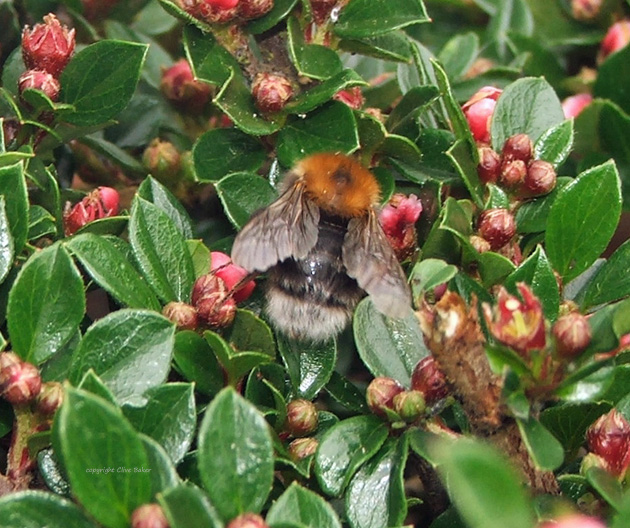
Tree Bumblebee
So you may now have a Queeen Bumblebee hibernating in an old mousehole in your garden now, waiting for that first warm day of Spring…….like us all.
 East Anglia the Wildlife, Landscape and People.