The Brown Hare (Also known as the Common Hare) is very much an animal of the East Anglian countryside preferring the agricultural landscape, living out in the open from the moment they are born.
Everyone knows the saying ‘as mad as a March hare’ the month when the hares courting instincts are much in evidence, but the female or ‘doe’ is pretty much ready to mate from January which they do through to September, mostof the time the boxing you see in March is not always two males or ‘jacks’ fighting but most likely than not a doe fighting off the advances of a jack.
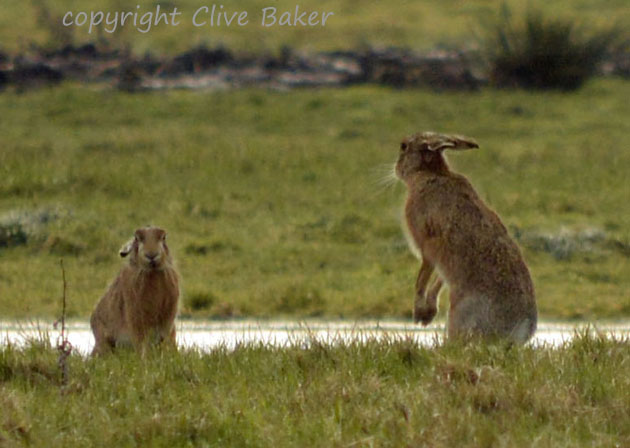
Two hares face off
The young (leverets) are born covered completely in fur and fully mobile, unlike rabbits that are born, blind and naked in a burrow.
The Doe gives birth to the young in a group and then moves them one by one to a shallow depression or ‘form’ so they are split up, maybe to increase their chances of survival from predators such as foxes, stoats and now increasingly in East Anglia Buzzards.
Hares will keep low on the ground keeping their long ears down low over their backs and will use their great speed to run away at the last moment.
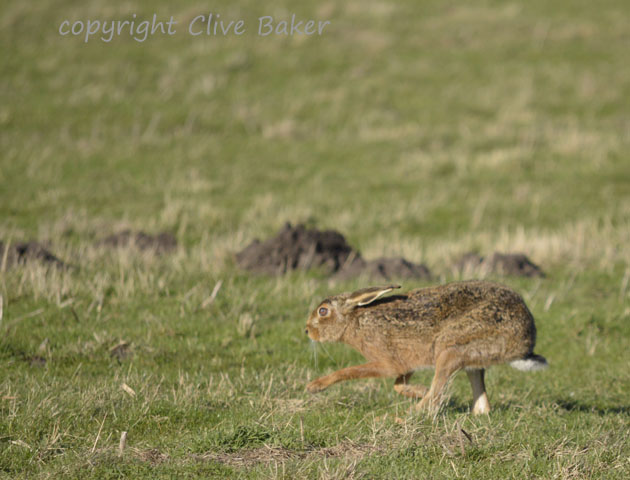
A disturbed hare taking flight
Because of its antics the hare has is steeped in folklore, with tales of witches turning themselves in to a hare to run away, and beliefs in parts of the country that a hare changing sex every month, even today we use expressions like ‘hare brained’ and ‘hopping mad’ so it is no surprise the name hare comes from the Anglo-Saxon word ‘hara’ which is to ‘jump’.
 East Anglia the Wildlife, Landscape and People.