A few days ago I noticed a queen bumblebee was going in to my compost heap, she would have spent the winter hibernating in an old mouse hole and would have emerged in early Spring to start collecting nectar and pollen from the first flowers she could find.
Once she has found a suitable nest site she will start laying eggs and collecting nectar and to feed the larve the first of which will become workers. these will take over the task of collecting the nectar and pollen whilst the Queen remains in the nest and basically becomes an egg laying machine to expand the colony.
All of these first workers are females but will be infertile, later in the season she will start to lay male worker larve and fertile females which will become future queens which mate with these male workers.
The infertile female and the male workers will all die in this first year but the new queen bees will carry on the cycle to hibernate and emerge the following Spring to lay the fertile eggs they have had since this Summer so completing the cycle, it is these Queens that will only live for two years.

White-tailed Bumblebee
This is the time of year I get my Bee books out as I have to remind myself on the identification features of each bumblebee, as there are 24 species of Bumblebee in the UK, add to that the difference between the females and males then it can get quite tricky. first of all the Large bees are going to be queens, the smaller ones the workers, so this time of year the workers are going to be females also being early in the season there are going to be some bees that have not yet emerged, so I can safely say that today I have seen a aptly named ‘Red-tailed bumblebee’ worker as it was small with an orange bottom and completely black body being a female (the other red bottomed one is the Early bumblebee but this has yellow stripes on the body). The bumblebee I saw in the garden was the Buff-tailed this time a queen as it was large, can be confused with the White-tailed bumblebee but the tail on the Buff-tailed can be anything from a dirty white to buff and sometimes can be an orange red.
So all in all it can be very confusing so I would say get yourself a good book or maybe even join the BBCT as you will get some very good information to help.
The easy bumblebee to Identify is the Tree Bumblebee the only one that is ‘Ginger, black white’. I will not mention the Bee fly
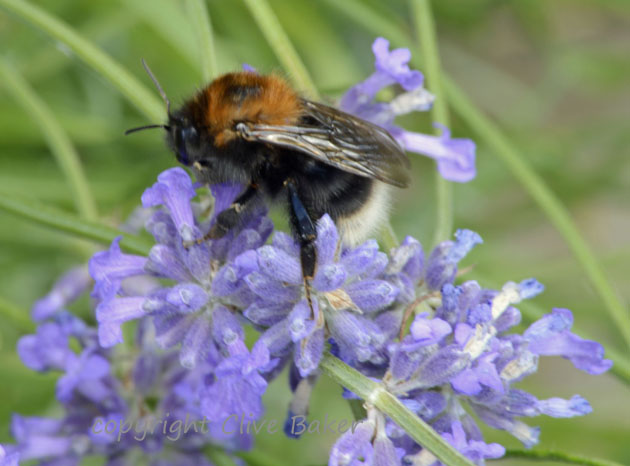
Tree bumblebee
 East Anglia the Wildlife, Landscape and People.