Sometimes you can go a long time and not see a Wren, but these past few days I am seeing my fair share on my walks and in my garden, having said that I only usually see one in my garden but recently I have seen two, obviously this is busy time for all birds as they look for mates, build nests or as some of the early starters are doing feeding young.
The Wren however although small at 9 to 10.5cm seems to be the loudest and the most active. Often low in undergrowth they can be seen in ditches, gardens and sometimes in tops of bushes and trees.
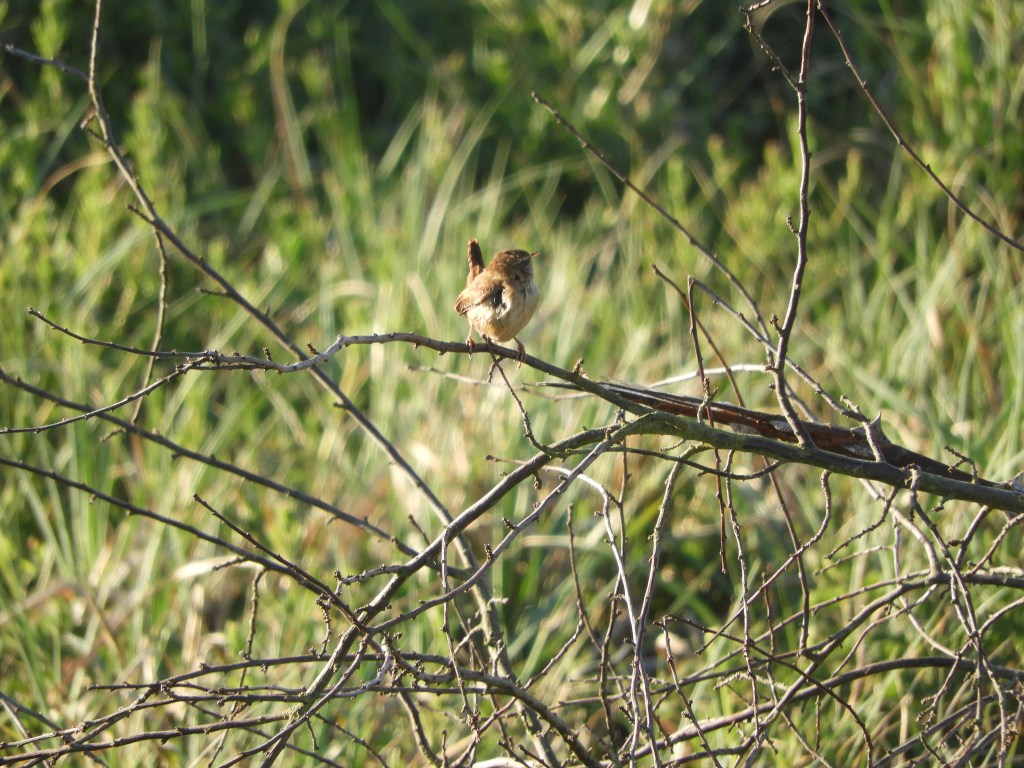
Usually a singing wren will be seen with it’s tail cocked and the body appears to be tensed as it puts all it’s effort into singing, loud and vibrant, it’s song is a warble that is fast and ringing with a little trill at the end. Usually it gives a harsh rattle when it is disturbed or alarmed.

The Wren is widespread in the UK with around 8 million pairs, the interesting thing about this busy little bird is the nest building, the male will construct several nests which are globe-shaped and they can be located in walls, banks, trees, or as in my case this week a bird box, The nest is made from leaves, grass and moss. The female when she has chosen one from the several the male makes, lines it with feathers. A few years back my neighbour had a wren nest in the mouth of a wooden African face mask he had nailed to his fence, the same year I found a wrens nest in my clematis, obviously the female preferred the face mask over my clematis.
As well as using nest boxes for nesting at times Wrens will also use them in the winter for roosting, usually there will be more than one Wren in a box for warmth, the record being for the amount of Wrens found in a nestbox being 60.
All that effort by the male to make several nests may not be all for nothing as he may mate with other females, now considering each female lays up to 6 eggs and both parents feed the young he may have his work cut out especially as they will have two broods in a season.
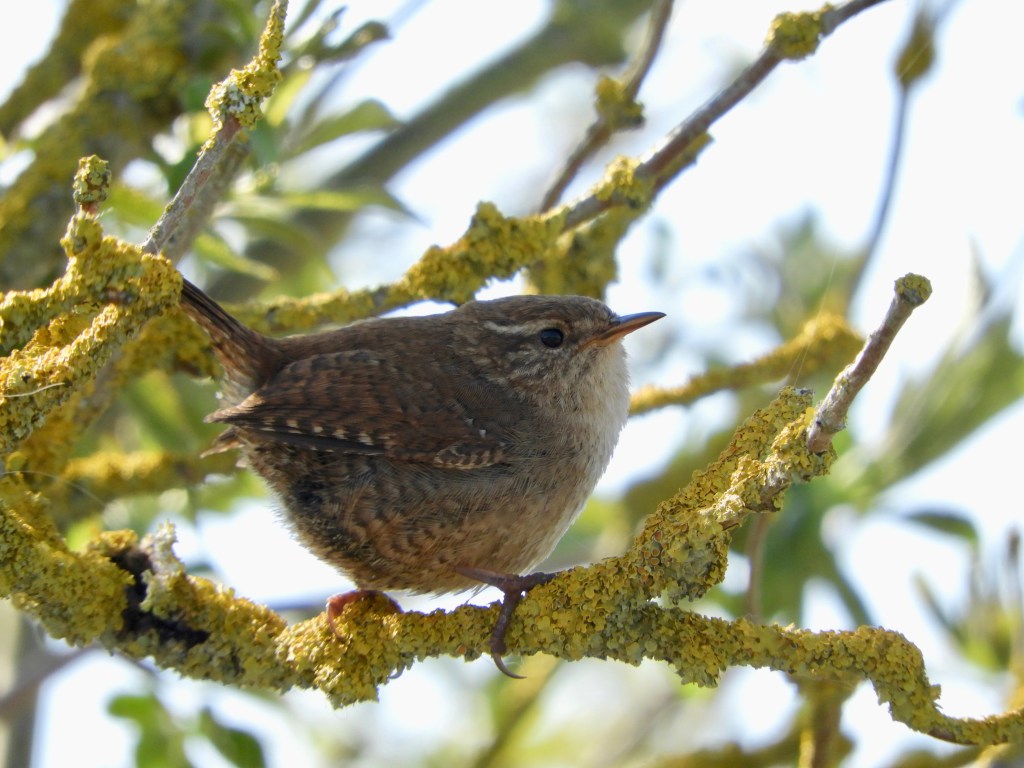
Most people will also know the Wren as Jenny Wren and I am sure in different regions of the country they are known by other names, but in the book ‘Wild Life in East Anglia’ by W A Dutt, published in 1906 by Methuen & Co., 36 Essex Street W.C. London, he lists all the names the Wren was known by throughout East Anglia which I have listed below:
The Wren aka:
Ground Oven (also Chiffchaff) This may be because of the dome shaped nest
Oven Builder (also Chiffchaff) as above
Stag
Titmeg
Tittereen
Tom tit

The population of Wrens in the country is stable but during harsh winters numbers may fall drastically but they soon bounce back with having two broods a year.
 East Anglia the Wildlife, Landscape and People.