Hare today

Yesterday I was leading the Hare walk  at WWT Welney as a volunteer I usually do the guide in the hide, swan feeds and the hare walks.

I like the hare walks because you get to see the hares running around, boxing or just keeping low and making an escape when you are nearly on top of them.

The stronghold of the Brown hare is East Anglia as they like arable fields and you are more likely to see them running around the fields here.

But yesterday I saw a sight I have never seen before as I was leading a group of sixteen people round somebody said ” is that a bird of prey over there? ” as I looked in the direction they were pointing I could see it was, in fact I could tell it was a harrier, but as we were facing into the sun and we had a sighting at Welney of a male Hen harrier earlier, I needed to try to see if it was a Marsh or Hen harrier, I set up my scope to watch the bird and as it got lower and out of the sun I could see it was a Marsh harrier, then I noticed on the ground a hare feeding and the harrier was getting lower and heading for the hare, I wondered what was going to happen next as a hare seemed to big for a harrier to take.

The harrier landed on the ground behind the hare and the hare turned round and faced the harrier, they were nose to beak and just sat here in a face off, I could not take a photograph as my lens was not good enough and they were quite away off.

I do not know if this was a fairly young harrier or if the hare was a female and wondered if she should fight off the advances of the harrier but they just sat there staring at each other, they could still be there now!.

Hares staring at each other

A pair of hares facing off

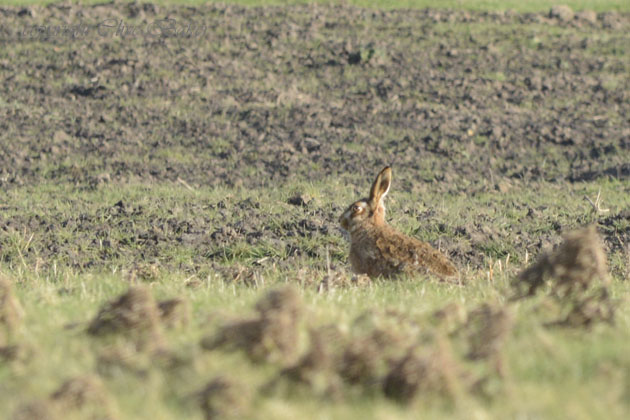
Lone Hare

Lone hare at home in the East Anglian Landscape
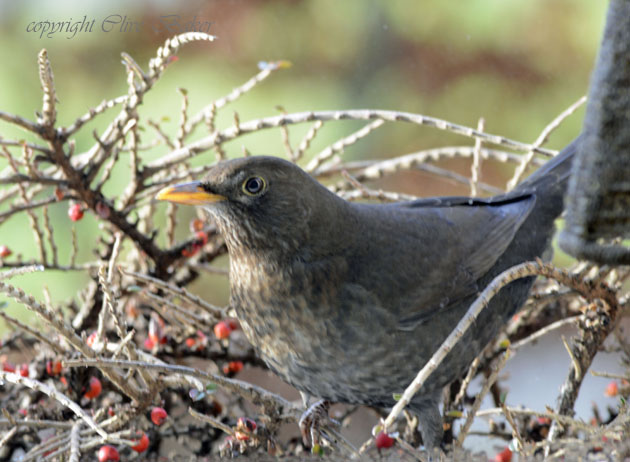
The feeling of being watched

Sometimes you do not need to go far to see wildlife, in fact just a glance out of the window can provide results, it is always good to have things in the garden that will attract wildlife like feeders, nest boxes, a small pond and the right plants and shrubs for food and cover.

One bonus in the Winter is having shrubs that produce berries, like the Cotoneaster we have under out front window, which provides lots of bright red berries that the birds love, some mornings when it is cold I have seen, sparrows, blue tits and blackbirds feeding on he berries, in really cold weather I have come home to see redwing and fieldfare fly away from the shrub.

But it is the blackbirds that seem to be the more bold I have often sat with my back to the window with the feeling I am being watched, like this Sunday when I sat reading the Sunday paper, I turned round and saw a female blackbird eating the berries, it looked at me and I looked back at her,we were eye to eye only inches apart with only the double glazed window between us.

Female blackbird feeding on berries

As she ate the berries, the female blackbird gave me the eye.

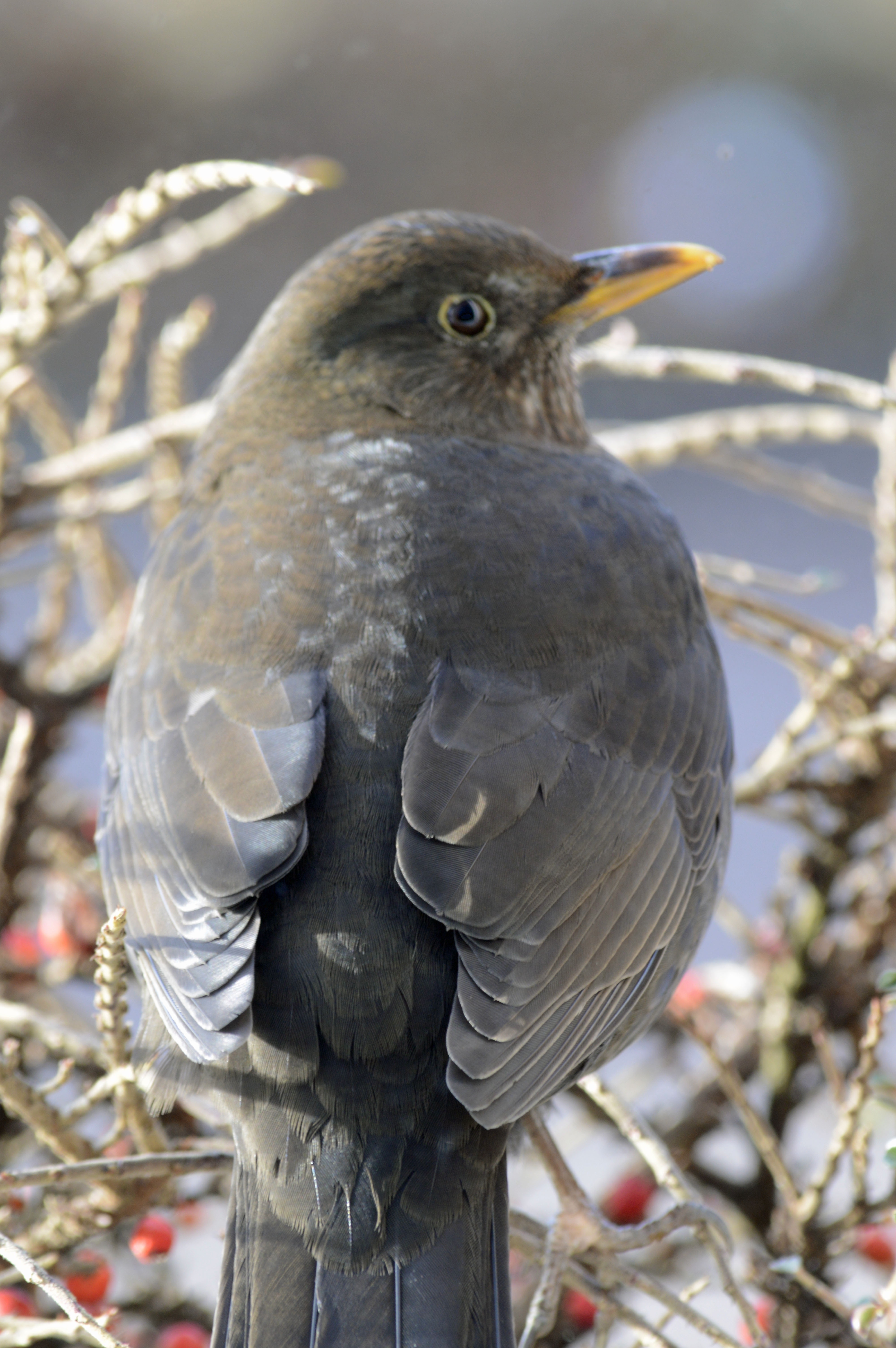
She stayed there long enough to let me get up and fetch my camera, but as I took a couple of photographs she decided to turn her back on me as much to say, if I can not see him he can not see me.

Female blackbird

The blackbird decided to turn her back on me in disgust

It is only when you see these birds close up you can see wonderful nature is.

Bullfinch and Kingfishers

Today we had our local wildlife group new year walk around Ely, the forecast looked grim but it had stopped raining by the time we started our walk at 10:30 am, by the time we got down to the river we heard the call of a Grey wagtail as we looked for it a Kingfisher so at the same time we had two birds to look at Grey wagtail on the rail bridge and a Kingfisher on a branch by the bridge.

The sky looked dark but as we walked along the river we had a snipe fly over and land amongst the vegetation on the flooded meadow to our left soon to be hidden from view.

But the best spot of the walk was as the weather turned for the worse and the rain started to come down again we had a small group of four Bullfinch all appeared to be males but there may have been one female as most of the group showed us their white rumps as they flew in front of us, but at least two of the males allowed us to get close and see them in all their glory.

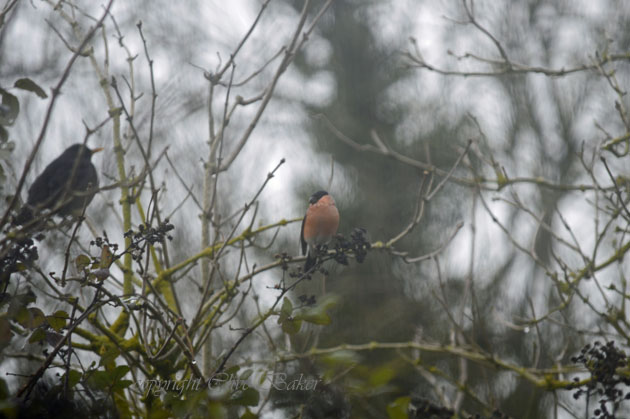
Bright red breasted male Bullfinch

A male Bullfinch allows us to get a close look at him

These are quite a handsome looking bird and in the Winter they tend to fly in groups, perhaps as more birds can look for food or maybe as there is little leaf cover at this time of year more eyes are better to look out for the odd Sparrow hawk on the hunt.

Same bird but closer

Closer look at the Male Bullfinch

It was raining quite heavy when I took these photographs of the Bullfinch so I was quite pleased they have come out well.

So a good start to the New Year with another 3 hour walk and 6 more birds added to the list.

A hard frost but a sign of warmth?

It was a very hard frost this morning and in places where the Sun did not show the frost has remained all day, but the sky was blue and on my early morning walk with the dog the birds were looking for food and as it was cold they were putting more effort into searching rather than singing, but as the rising sun cast long shadows over the frosted grass the Robins were starting to sing whilst other birds like long-tailed tits made their contact calls keeping in touch as they flitted in the trees.

Long shadow of man

The rising Sun created long shadows over the frosted grass

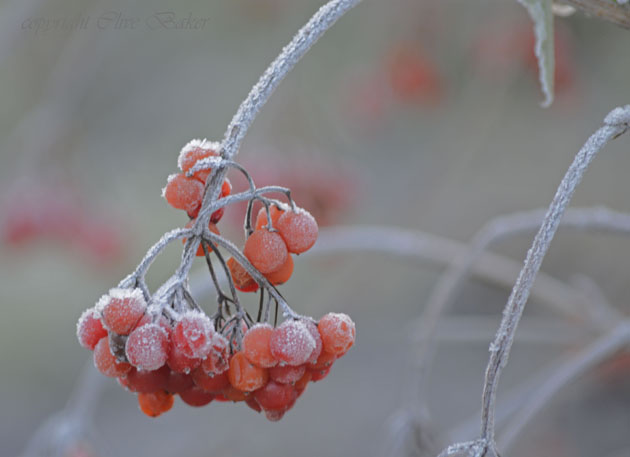
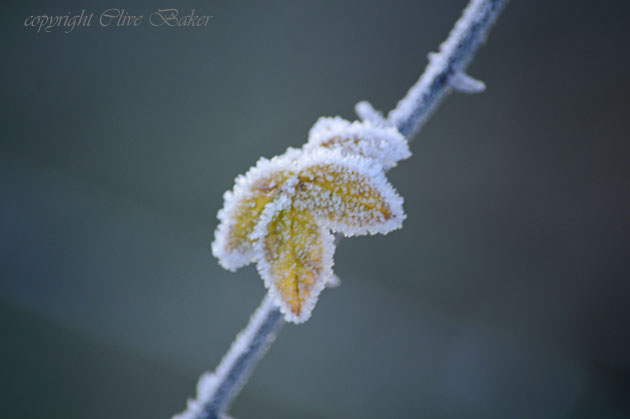
The frost had made jewels of the berries and leaves that caught the Sun and sparkled like late Christmas decorations in the hedgerows.

Frost covering red berries

The frost made jewels of the berries

Frost covering  a golden leaf

and the leaves in the hedgerows

But as it was so cold the Fieldfares and Redwings joined the Blackbirds as they gathered berries, flying in front of us as we made tracks through the frost the Fieldfares gave out their loud ‘rattle’ warning call, but I bet if this cold snap continues they will soon get used to us humans as we go about our business.

Bird in flight

The Fieldfares gave out their ‘rattle’ call and flew ahead of us.

As Poppy explored the frost and the sun began to climb, there was some warmth in the Sun and it made me think that in a few months time we could be seeing the first signs of Spring but we may see some colder days yet, but as if to give hope I saw my very first Snowdrop in a garden today, only one flower but could that be a sign of  warm days ahead?

Border collie dog in frost

Poppy exploring in the frost

Birds are moving in

Boxing day walk and the overnight frost is still hanging about late in the morning, it is quite noticeable how many birds are feeding on the berries still on the trees and shrubs in the hedgerows but these are starting to get exhausted as the weather is getting colder and the birds are needing to eat more to keep warm and survive the night.

Now the birds are moving into the gardens and starting to strip the berries on our shrubs, even under our lounge window the Cotoneaster is being stripped, we have had a blackbird and blue tit looking in on us as we carry on with our festivities and they eat the berries.

When I walked the dog this morning the visiting winter thrushes and now moving into the urban areas from the open countryside, do they know the weather is getting colder and we are in for a bad spell?.

Winter thrush redwing on branch.

Redwing looking for food in gardens

Redwing can be identified by the cream coloured eye stripe and rust coloured area under the wing from our native Song thrush.

Windy Wicken Walk

Today I decided to have a walk round England’s oldest nature reserve, Wicken Fen my aim was to see if I could see any Hen Harriers or Short-eared Owls as I have been hearing reports of sightings over the last few days.

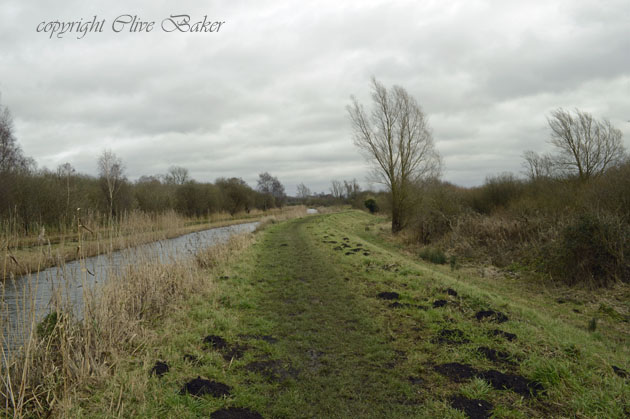
Muddy footpath beside small river

The footpath along Wicken Lode

I started my walk along Wicken Lode, a lode is man-made waterway, which are Roman in origin, the were cut to provide access to villages that were to the east of the River Cam.

Along here I had seen Redwing and Marsh Harriers, but no Short-ear owls, a great spotted woodpecker flew over me into the scrub on the other side of the lode, it’s undulating flight making short work of the head wind.

Open fen and grey sky

Bakers fen Wicken

As I left the path along the lode I headed towards Bakers fen and soon turned into the wind, I was getting the full force of the wind now as I had it to my back along the lode, it is more open here and I did not think I would see much bird life, but I managed to see a female Stonechat on a reed stem also a Little egret on Bakers fen as I headed towards Adventurers fen and turned right up the track heading back towards the lode again I put up a large flock of Redwing getting berries in the shrubs on the side of the track, I was sheltered here but the track was very muddy, it was hard going but I soon reached the track along the lode again and headed back to Upware where I had started.

Unfortunately no Hen Harriers or Short-eared owls, but a bracing walk around an ancient Landscape and the sound of the wind made it that more wild.

Windmill behind a reedbed

St Edmunds fen Wicken

Confusing the birds

Small blue tit on nest box

Blue tit inspecting nest Box

Today has been very mild for December, in fact I could hear Blue tits singing as if it were Spring.

Only last weekend I saw a Blue tit inspecting one of the nest boxes in my garden, but last weekend was very cold so the Blue tit was not looking for a nesting site but somewhere to roost for the night, the numbers of birds that die during the winter is quite high, so they will spend most of the daylight hours looking for food and any cold snap means the birds will waste energy keeping warm so it is important that food is put out for them and as I know some people take their nesting boxes down for the Winter I leave mine out.

Unfortunately not all survive as this Spring I did find a dead Dunnock in one of my nest boxes, but some birds will roost together in a nest box for warmth and believe it or not the BTO has the record of the most Wrens nesting together in a nest box at an amazing 63!.

But sometimes in prolonged periods of cold you may get an unusual visitor to the garden looking for food, a couple of years ago not only did I have Waxwings in the garden but also a Reed Bunting, normally seen along river banks I was surprised to see a male Red bunting near my very small garden pond, but like all the birds he was finding it hard getting food so was visiting gardens.

Male Reed Bunting in thicket

Male Reed bunting normally seen along rivers but will visit gardens in cold periods

So as we are told by the weekend we will see another cold snap, take the time to put some food out and if you have taken your nest boxes in consider putting them back out again for the birds, who may be slightly confused by our mild weather.

Off the Rails

There are two East Anglian birds that are usually hard to spot as they spend most of their time in reed beds where they breed, one is the Bittern and the other is the Water Rail.

The Rail Family consists of  the Coot and Moorhen and are the most commonly seen, the Corncrake and the Spotted Crake are the rarest and migrate to Africa in winter, whilst the Water Rail like the Coot and Moorhen is resident.

The Corncrake unlike the other four rails spends all it’s time on dry land hidden in tall vegetation, the Spotted crake and Water Rail like wet vegetation but the hardest to see will be the Spotted crake as it is the smallest of the rails and will spend nearly all of it’s time in thick cover, some birds do over winter but numbers are around 120 birds then and we may only see these in the south of East Anglia.

So the Water Rail although secretive is the most commonly widespread after the Coot and Moorhen, and are mostly found in East Anglia, you may see one in the open but it usually darts back into the reed stems, you are more likely to hear its pig like squeal in the reed beds.

Small brown water rail in reed beds

Water Rail I was lucky to see at RSPB Titchwell


Waiting for arrivals

It has got really cold now more like winter, the light and the chill as it has been damp and overcast all day, lunch time was brightened up by the sight of a pair of Kingfishers of all places in Cambridge outside the botanical gardens along Trumpington road, only a short walk from the City centre, it is amazing how this brightly coloured bird goes undetected as people walk, cycle or drive past.

We have often seen a kingfisher along here and sightings are more regular as the temperature starts to go down so to see two together along here was a bonus, is this a sign we are about to get a spell of true Winter weather?.

If we about to get a cold snap then perhaps we will get sightings of winter thrushes closer to our homes as they start to look for berries or we may get Waxwings from Scandinavia, we have an apple tree in our road that is laden with apples, I shall keep a close eye on it this next few days just in case we get any on there like we did two years ago when I took the photograph below.

Waxwing on an apple tree

Waxwing feeding on apples

The Sound of the East Anglian Landscape
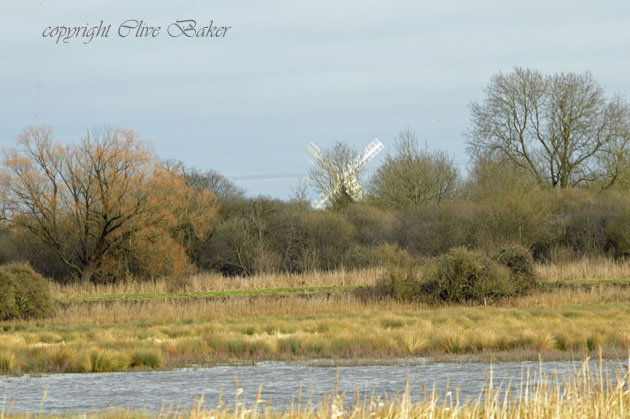
I had been thinking today that if asked to describe the East Anglian Landscape I could perhaps describe the landscape to someone who had never visited here, from the Broads to Fens, the undulating fields of North Norfolk, vast beaches, heathlands, and the Brecklands and dominated by the Big Skies of East Anglia.

But then I wondered what would be the typical sound of East Anglia? as a child I would have said the constant cries of gulls, mainly Herring Gulls, growing up near Lowestoft there were always gulls, that and excited shouts in Summer of people on the beach.

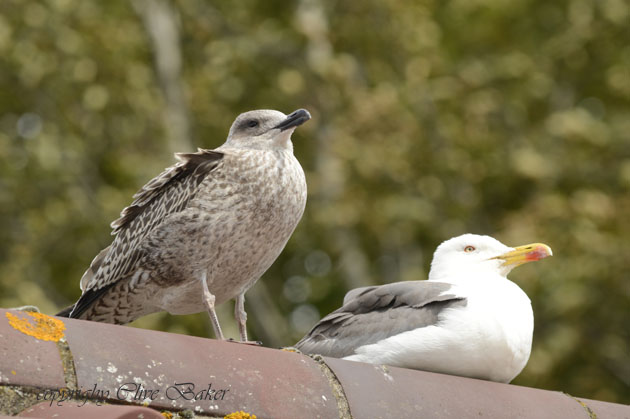
Two gulls on roof

A young and Adult Herring gull

But these would be just the sounds of the coast, not of the whole landscape East Anglia, but I think the one sound that for me reflects the East Anglian landscape is that of the Skylark, I have heard it on the coast, on heath and in land on agricultural land and pasture.

I have heard its song as early as February, I am sure most people can identify its song and I bet like me they always look up to see if they can spy this small brown bird as it ascends to a great height only to drop like a parachute back to earth, it reminds me of childhood years spent exploring the Suffolk fields near my home and the constant song of a skylark always seemed to be there in the background.

Poets like Shelly and the East Anglian poet John Clare were inspired by the skylark, I heard a poem this year read on Radio 2 by Issac Rosenberg who was killed in the Somme in 1918, he wrote a poem about a skylark after returning from a night patrol and hearing  a skylark singing, it must have been a reminder of home amongst the horror he was enduring.

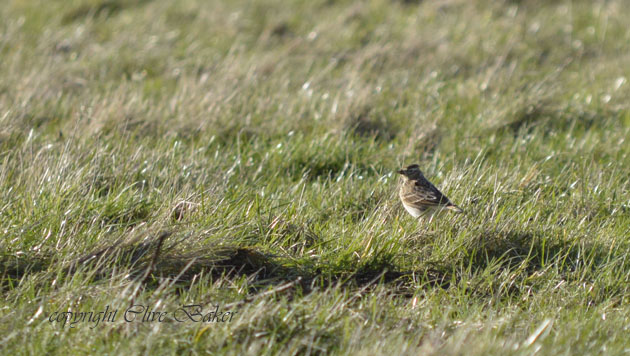
Sklark on ground

Skylark

Returning we hear the Larks

Sombre the night is.
And though we have our lives, we know
What sinister threat lies there.

Dragging these anguished limbs, we only know
This poison-blasted track opens on our camp –
On a little safe sleep.

But hark! joy – joy – strange joy.
Lo! heights of night ringing with unseen larks.
Music showering our upturned list’ning faces.

Death could drop from the dark
As easily as song –
But song only dropped,
Like a blind man’s dreams on the sand
By dangerous tides,
Like a girl’s dark hair for she dreams no ruin lies there,
Or her kisses where a serpent hides.

Issac Rosenberg