Sometimes Wildlife can be right under your nose

Nan birdwatching with seagull behind him

You can wait for hours and not see anything

Wildlife watching can be fun, be it bird or animal, sometimes you can wait for hours and see nothing, sometimes you are lucky and see things you did not expect.

When I lived in Lowestoft we would quite often get rare birds fly in from the sea, once I saw a Woodchat Shrike and a Rose coloured starling in 2 minutes only about 800 metres apart and this was only  after I overheard a man in shop say,  ” there are a lot of Twitchers down at the Bird’s Eye factory looking at a pink bird “.

I have heard stories of a Puffin on the river Ouse in Cambridgeshire, and a pod of Porpoises that swim up the river Nene as far as Wisbech on a regular basis ( I have seen the photographs ), more a surprise perhaps would be in the 1800’s when Whittlesea mere in Cambridgeshire was drained  the skull of a wolf and skeleton of a killer whale were found.

So As I always say it is worth keeping you eyes and ears open as you never know what will turn up.
The early bird song of the morning

I have noticed these last few morning more Robins singing, this is usually around 5:00 am when I am walking the dog before I go to work.

In one area of about 100 metres I heard at least five singing, this is usually birds declaring their winter territory as the UK population is increased by birds from mainland Europe that have migrated here to spend the winter.

The song in the Autumn is different from that sung in Spring when the males are attracting a mate, The Autumn song is more subdued and can often be heard late at night ( I once heard one at 1:00 am on new years day, my first bird spot of the year ), the spring song which can start as early as  late December is more powerful and lively.

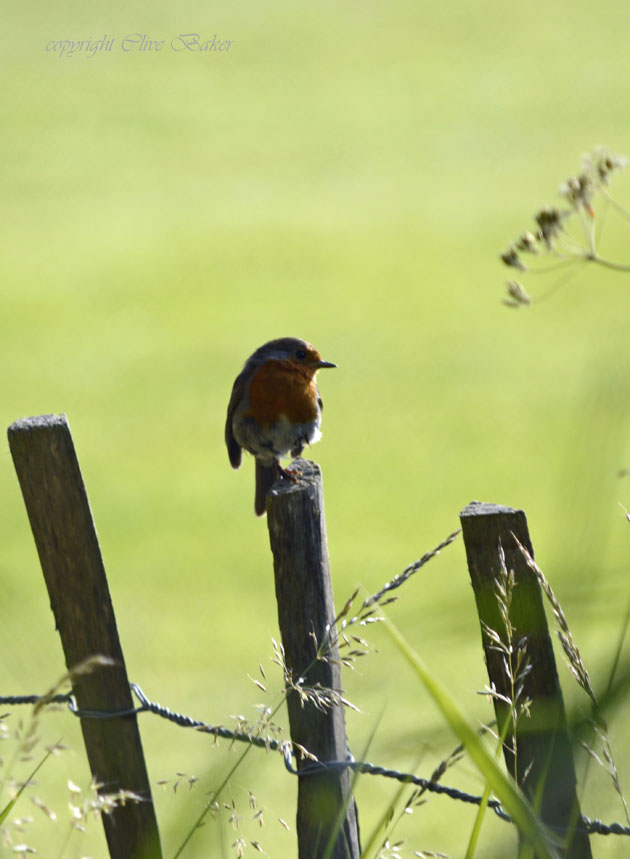
Robin on post

Robin singing in Spring

At this time of Year the robins usually sing under street lamps, could it be they think this is the rising Sun?, research has shown that if it is a very cold night the robins will only sing if the have enough energy as they use most of their energy keeping warm, the robin can store fat for energy so if it has been a warm night they will have enough energy left to sing.

Gardeners may have noticed as they dig ground over in the Autumn and Winter they may have a robin at their feet, getting any worms exposed by the digging, this behaviour is linked to when the robin (which is a woodland bird) would follow wild boar and pigs as theY foraged in the leaf litter of the woodland floor.

How to clear the Bird feeders

Day off today after I had been to see a certain Mr Robert Plant of Led Zeppelin fame last night, so up slight ly later this morning.

On looking out of the window into the garden I could see the feeders were full of House Sparrows, and one or two Dunnocks on the ground, we seem to be lucky here as I know there are parts of the country where there are few or no House Sparrows at all.

Sparrow in berries

Male House Sparrow

Even more scarce is the Tree Sparrow, easily identified by red-brown cap as opposed to the grey cap of the House Sparrow, and the white cheek with a square black patch.

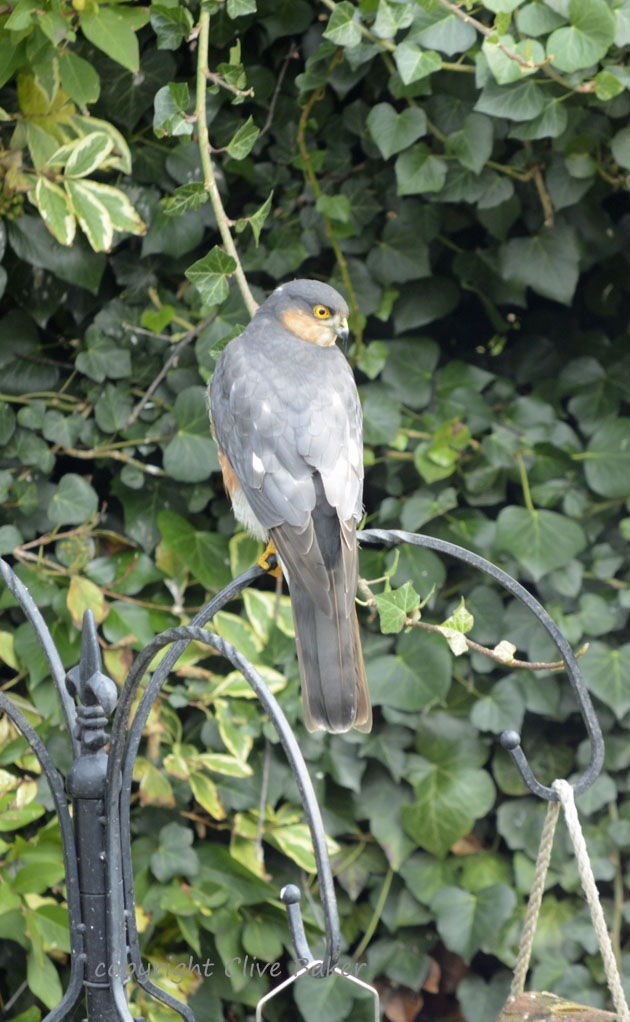
I was just thinking of topping up the feeders and noticed they were not any birds on them so good time to go out and do it, only to notice there was a female Sparrow Hawk on the fence, I grabbed my camera on to have it fly off, so put my camera down and went upstairs only to see she was back sitting on the feeders, ran back down to get my camera and again she flew off. I managed to get a few shots of her last year but now she seems to be wise to me and the camera, so I shall use an image from February and fingers crossed I may catch her with the camera again soon.

Sparrowhawk on feeders waiting for a meal.

Waiting for a meal

So here is an update, I managed to get a photo of the Sparrowhawk as it visited the garden for the third time and it turned out to be a Male,

Male Sparrowhawk, sitting on bird feeders

Male Sparrowhawk

Which brings me back to the image of the Sparrowhawk in the first picture, within our local group this caused a bit of a debate, is the Sparrowhawk which visited my garden in February a female? I was convinced it was a juvenile male but others were thinking it was a female, so is my garden being visited by both Male and female Sparrowhawks? or is the February Sparrowhawk a male that has now matured in to the handsome  bird that is now visiting my new bird feeders?

Once rare now common and the confusing

As a child to see the Common Buzzard in the East Anglian countryside was despite its name quite rare, confined mainly to the west and South West of England, Wales and Scotland I did not see my first Buzzard until I was in my late teens and then it was only on trips to the Lake District.

Now happily they are becoming quite a common sight in the East Anglian Landscape, I am beginning to see one and sometimes a pair  in a field not far from me, in fact only this afternoon as drove past this field one flew over the road to a small group of trees at the edge of the field, despite the rain when I got home I grabbed my camera and walked back to the trees only to see the Buzzard flying away from me being hounded by a group of Rooks.

Common Buzzard in Flight

Common Buzzard

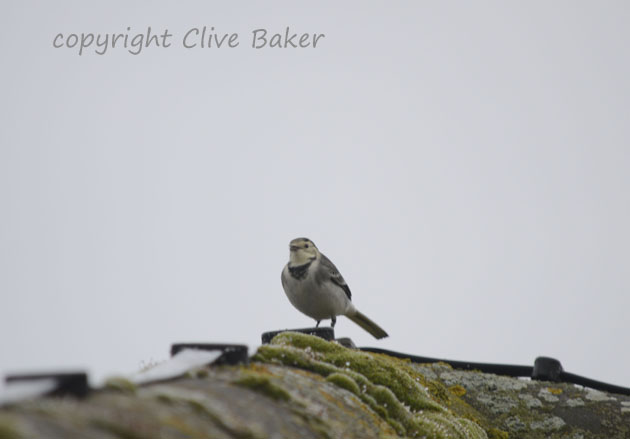
Whilst Buzzards are fairly easy to identify, we now get variations on what I once used to think was an easily identified bird, the Pied Wagtail, small, black and white, with a long tail constantly wagged up and down, it’s latin name is Motacilla yarrellii, but we now have the white wagtail Motacilla alba, so this morning when I saw two wagtails on the road I took some quick photos and came home to consult my bird books and everything seemed to point to that I had seen the white wagtail as it had the light grey back and slight yellow tinged throat or could it have been a Juvenile Pied Wagtail? sometimes it can get just too confusing.

White Wagtail on raod

White Wagtail maybe Juvenile

Pied Wagtail

Pied Wagtail

As an update I can confirm from this second photograph I took it is a Male 1st Winter White Wagtail

1st Winter Male White Wagtail

1st Winter Male White Wagtail

very helpful website figure 3 confirmed http://www.the-soc.org.uk/docs/white-wagtail-id.pdf

Swans, Owls and Otters

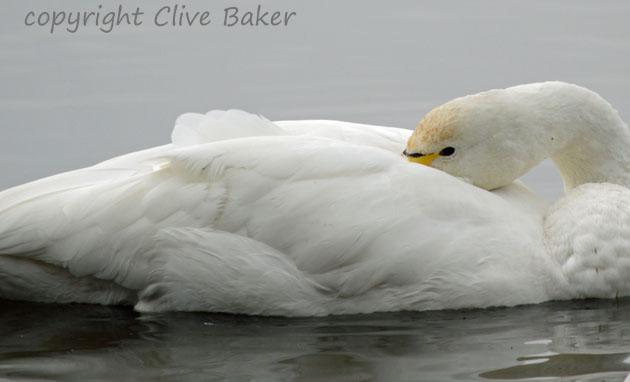
Whooper swan with head under wing

Whooper swan resting

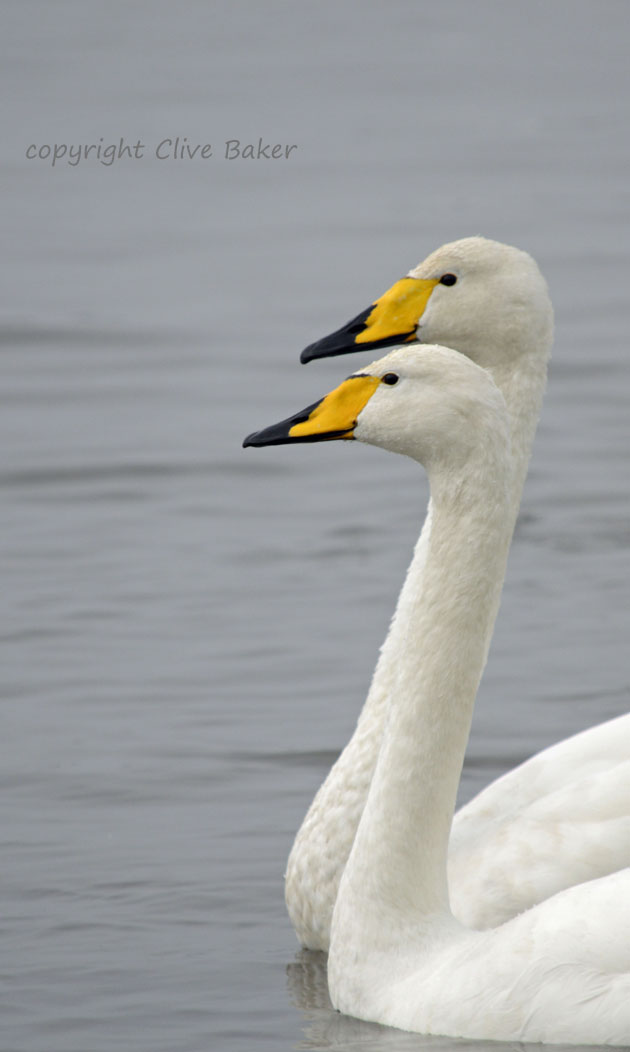
Today was festival of swans at WWT Welney, so I make no excuses for showing images of the whooper swans.

It has been misty nearly all day which in a way made it better as most of the swans remained on the Wash at Welney, only during breaks in the mist when it looked like it was lifting did some of the swans decide to fly out to feed in the surrounding fields.

Being the first day of the festival of swans despite the mist there was still plenty about, it seemed the Barn Owls were out early hunting as there were good sightings of one feeding along the bank of the drains, there had also been a sighting of a Long-eared Owl sitting on a post on the road that leads to Welney WWT centre, add to that Marsh Harrier, Rough Legged Buzzard and Merlin anyone visiting  today would not have been disappointed.

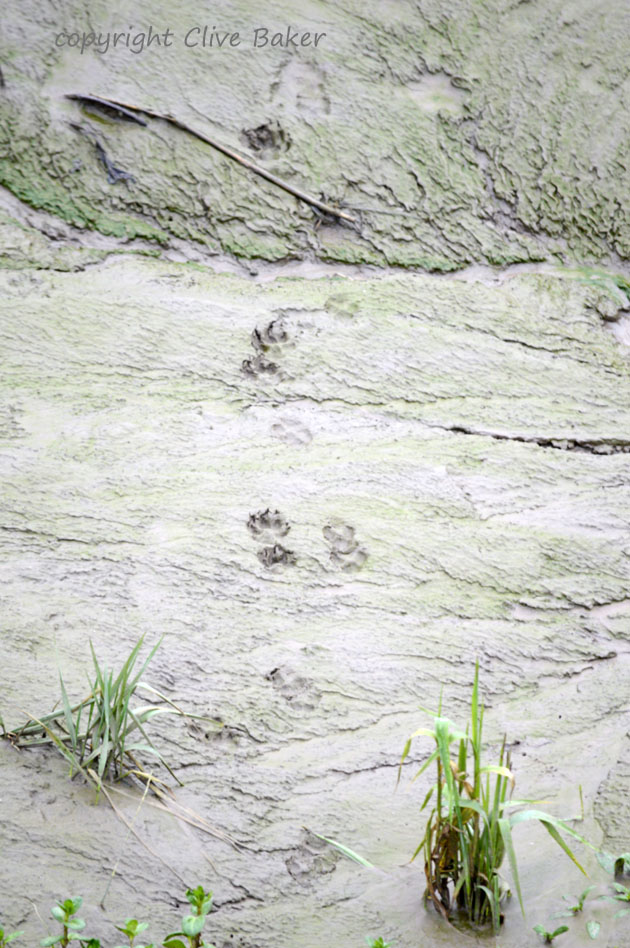
Not seen, but leaving plenty of evidence in the form of tracks there had been Otters in the Bedford New Cut easily overlooked by people crossing the footbridge they were there for all to see.

Otter footprints in the mud

Otter prints in the mud of the Bedford New Cut

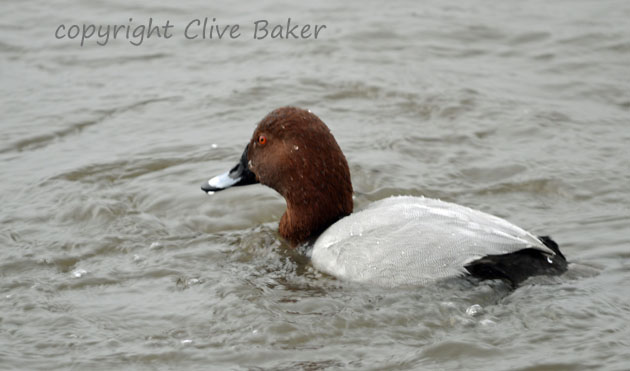
Along with the swans, were Pochard, the male far outnumbers the female at Welney with only 10% of the females coming here whilst most of the females will spend the Winter in the warmer climate of Spain.

Pochard Male diving duck

Male Pochard

There were also Snipe, Golden Plover, Black-tailed godwit, Redshank  and lapwing in good numbers, so all in all despite the weather it was a good day, I will finish off this post with more images of the Whooper Swans, after all it is Festival of Swans weekend.

Whooper swan

Whooper swan

Whooper swans

Whooper swans

The Dark Landscape

Leaving for work at this time of year is always in complete darkness for me which does have its for and against, on the plus side I do get to hear the odd Tawny owl calling, usually the female calls a ‘Toowit’ sound followed by a male calling a ‘Toowhoo’, hence the old saying ‘to woo someone’, so I was once told. I  also nearly walked into Muntjac deer as it wandered along the deserted footpath in the town, also hedgehogs not yet in hibernation trotting along the side of the footpath looking for slugs in the wet grass.

Another plus on clear cold mornings it is the stars and if you are lucky the odd satellite moving from horizon to horizon, I did get a bonus on Thursday morning when the international space station went from West to East in front of me at 5:50am I could see it for a nearly 4 minutes, NASA provide a handy website ‘Spot the Station’ so you know if and when you can see it from where you live.

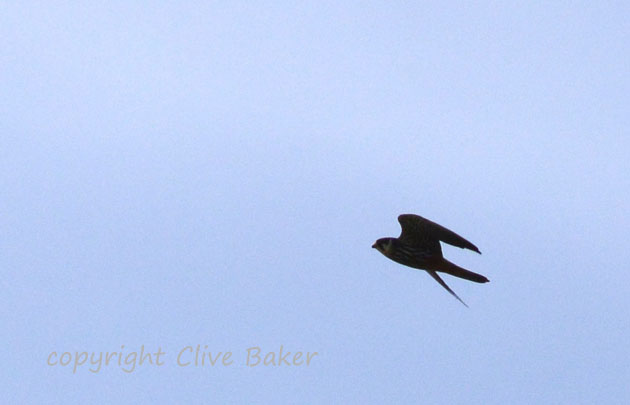
On the down side I can not see the usual wildlife from the train as I travel to Cambridge as it is too dark, usually I can count, fox, deer, Marsh Harrier, Buzzard and in Summer the odd Hobby.

Hobby small falcon

Hobby

But for now I have to make do with reading a book until the mornings get lighter.

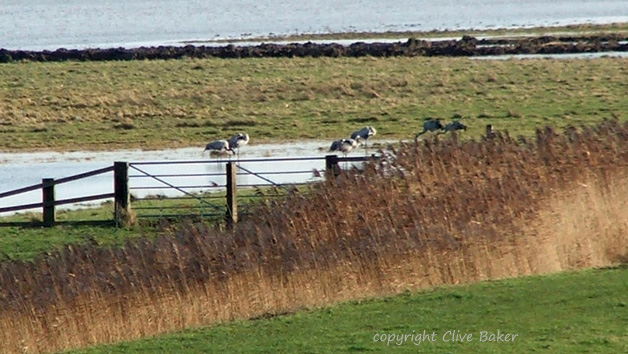
This Weekend is the Festival of Swans at WWT Welney, So I will be helping there tomorrow,  9 common cranes were sighted there yesterday, so hopefully they will still be about, in the Winter there have been up to 13 cranes flying together, known as the ‘Fenland Flock’ this would be sight to see, I have been lucky enough to see 6 fly in together and managed to get a photograph even with them being quite a way off I think you can see they are cranes.

Flock of six common cranes feeding in field

Common Cranes


Climate Change?

Every Month in the Autumn and Winter months our Local Group of the Wildlife trust hold talks on a wildlife related themes, one of the ones that stands out was by Brian Eversham, Chief Executive of BCN Wildlife Trust on Climate Change which he gave us the following predictions and facts

• there has been a doubling in the frequency of climate-driven environmental catastrophes since 1980;
• up to 50,000 human deaths in Europe were caused by the ‘hot’ summer of 2003 (which was only 2°C warmer than the current average, and may be the norm by 2050);
• a 1°C temperature rise would threaten 10% of species with extinction;
• sea level in the Thames estuary is now rising by 3mm a year, and this will increase to 8.5 mm a year by 2055;
• global carbon emissions mean that the chances of limiting warming to 2°C is now very unlikely.

On the plus side he said 80% of British wildlife species are southern and eastern in their current distribution, so can be expected to increase and spread in response to climate warming, IF the landscape is fit for them to move through. These are the potential ‘winners’.

I did not need to look far this week as already I have seen flowers in bloom you would normally expect to see in May like cranesbill that I have seen this last few days flowering in Ely and Cambridge.

Small pink flower, cranesbill

Cranesbill

Also we have seen ‘Summer’ birds like Blackcaps that breed in Britain and Ireland and migrate south in Autumn to winter in the Mediterranean and Africa, but the BTO has recorded over recent years Breeding Blackcaps from Europe heading West to spend Winter in Britain and Ireland, also last January I saw Chiffchaffs in Ely they normally arrive in Early Spring but it seems they are spending Winter in Britain and Ireland as well, could this be a sign our Winter’s are milder and they are able to find food. Best we keep our bird feeders well stocked and maybe we will see these new Winter birds in our gardens during cold snaps.

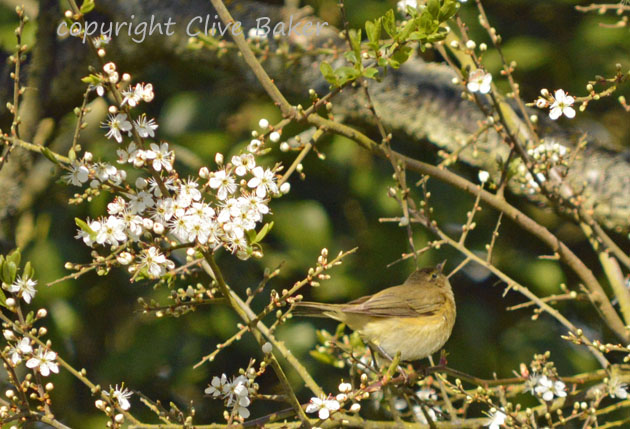
Small bird, Chiffchaff feeding in tree

Chiffchaff, on May blossom

Winter Visitors

Today dawned bright and Sunny and it was looking good for our Watch meeting this afternoon, Being one of the leaders for the Ely Wildlife Watch Group I am always keeping an eye on the weather, as nearly all of our meetings are outside.

The Ely Wildlife Watch group is aimed at children and young families, in short the aim to get children interested in nature and wildlife, so each month we have a theme that we base each meeting around. Todays was Winter visitors.

So I was pleased to see as I walked the dog a small flock of fieldfares fly over and having my camera with me I managed to get a quick photo of them as they headed West.

Small flock of fieldfares in flight

First fieldfares I have seen this Autumn.

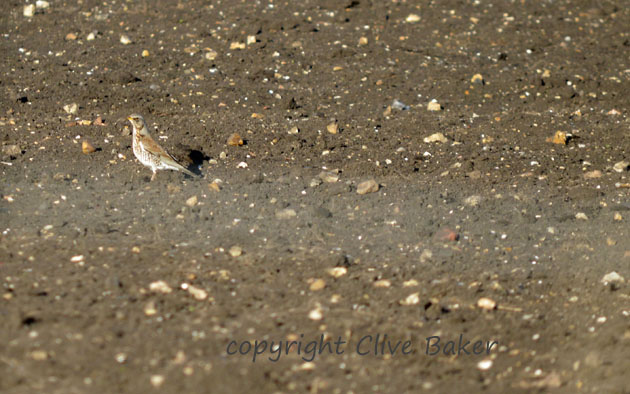
With the fields already showing signs of winter crops I am sure there will be more in the fields, but they are usually hard to see against the bare earth, fieldfares usually like orchards which were quite widespread in Cambridgeshire but have disappeared of the years since the second world war, there was estimated 33,ooo in East Anglia and now estimated to about 3,ooo orchards.

Fieldfare in ploughed field

Fieldfare.

But there seems to be plenty of fruit in wild in the form of sloes, haws and crab apples so maybe we will get more Winter visitors as it starts to get colder, I know we have already had redwings as I have heard them calling at night as they fly in a night but fingers crossed we will get Waxwings.

I will Just finish with wishing Jo one of our Ely Wildlife Watch leaders a very happy birthday, She is 40 you know.

Topping up the bird table

We had are real first frost of the Autumn today in East Anglia we may have had the odd air frost but this was a ground frost, so I expect all those plants that had late flowers out have now been hit.

On getting home from work I noticed the birds had nearly cleared all the food off the bird table I had put out the night before, all the meal worms had gone in the tray on the bird feeder, I am guessing the starlings had a feast here and maybe the odd robin or two, I know the hedgehogs we have in the garden had been sniffing the air under the tray as I had managed to get film of one doing this on my camera trap, so maybe one managed to climb up and help itself to some of these as well.

We mad not have a frost tonight but I think most of East Anglia will have rain by the morning, but I have still put food out for the birds and the hedgehogs which need to have the correct body weight before the go into hibernation for the winter.

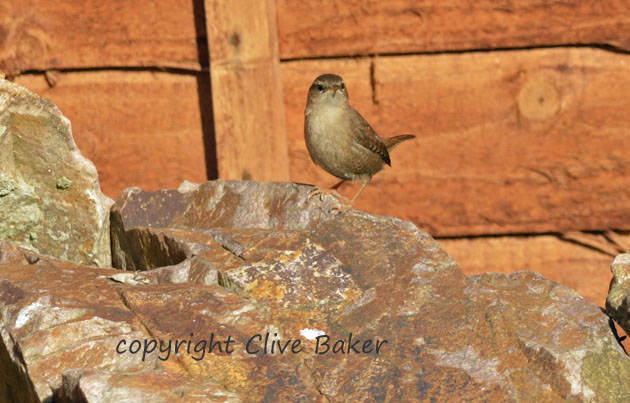
Wren on a rock

Wren on the rock behind the garden pond

Slaughter on the tracks

Standing on the platform at Cambridge rail station is not always a place you would expect to encounter East Anglian wildlife, although once I did see a Woodcock fly past platform 4, this evening I noticed on the tracks the remains of a pigeon, mostly overlooked as we all stood there waiting for our train, I started to notice more remains of birds, at first I wondered how it was so many birds were struck by trains here, then I noticed near the pigeon the remains of a brown bird, I went to have a closer look at it and was sad to see it was a Tawny owl, in Cambridge Station? so I walked a few feet up the along the platform looking and counting the birds (getting strange looks from other passengers). in a short distance I had seen a Tawny owl, pheasant, red-legged partridge, stock dove and a number of wood pigeons.

Then it dawned on me these were birds that had been hit out in the countryside and as the trains stopped into the Station they fall off, a sad sight and it made me wonder how many more birds, rare and common, are killed just by train strikes alone.

On returning home I could see it was going to be a cold night and made sure that there was plenty of food on the bird table and in the feeders for the birds in the morning, after all they need all the help we can give them.

Chaffinch on branch

Visiting Chaffinch to our garden feeders