Long while coming but after a Winter’s walk at Wicken fen here is my first post for a long while. Bit of an up and down year health and work, but 2016 looks better so until then here is a view of Wicken fen on a winter day.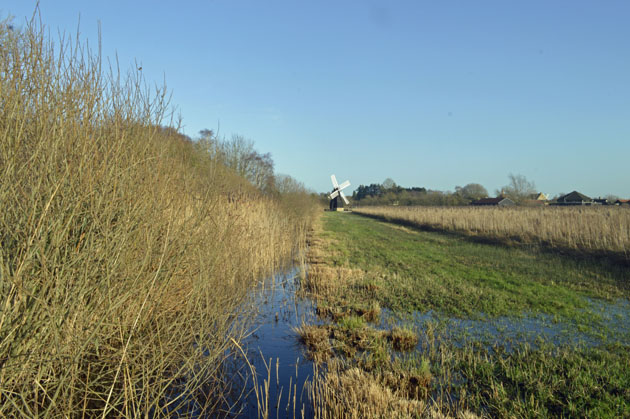
A walk along the river and hidden gems.
I often think we are lucky living in East Anglia, with so many walks in such a diverse landscape we are never far from walks that pass by buildings and countryside that can lift the spirit. Take for instance the Ouse valley near Huntingdon and St Ives, as cars thunder past on the A14 heading East to the coast or West to the Midlands how many of the drivers and passengers are aware sandwiched between the A14 and the A1123 are the villages of Houghton and Wyton, I am also guilty of passing by, but this weekend decided to stop and visit and found a hidden gem, Hougton Mill, the Mill is the oldest working mill on the river Great Ouse.

Houghton Mill
A mill has stood on this site for over 1000 years, nearly completely demolished once but restored by villagers it has evolved to this fantastic building we see today. The first building that stood here was built in 969 AD and various buildings had stood on the site over the years, owned by monks, the crown after the dissolution of the monasteries and then in nineteenth century a Quaker Potto Brown, who done a lot for the mill and the villagers, a Bronze Bust of him stands in the village today. Potto Brown extended the present mill which was built in the 1600s and was working up to the 1930s.

Flour sacks on the floor of Houghton Mill.
When the mill was decommissioned local residents purchased the mill and gave it to the National Trust, after the second world war it became a Youth Hostel. Today the National Trust opens the mill as a tourist attraction and still mills flour here after installation of new millstones in the 1990s, you can no longer stay here as a Youth Hostel but there is a campsite next to the mill.

Cogs in Houghton mill
From the mill there are a number of walks by the Great Ouse, we went East towards St Ives, first crossing a stream to walk along the river side.
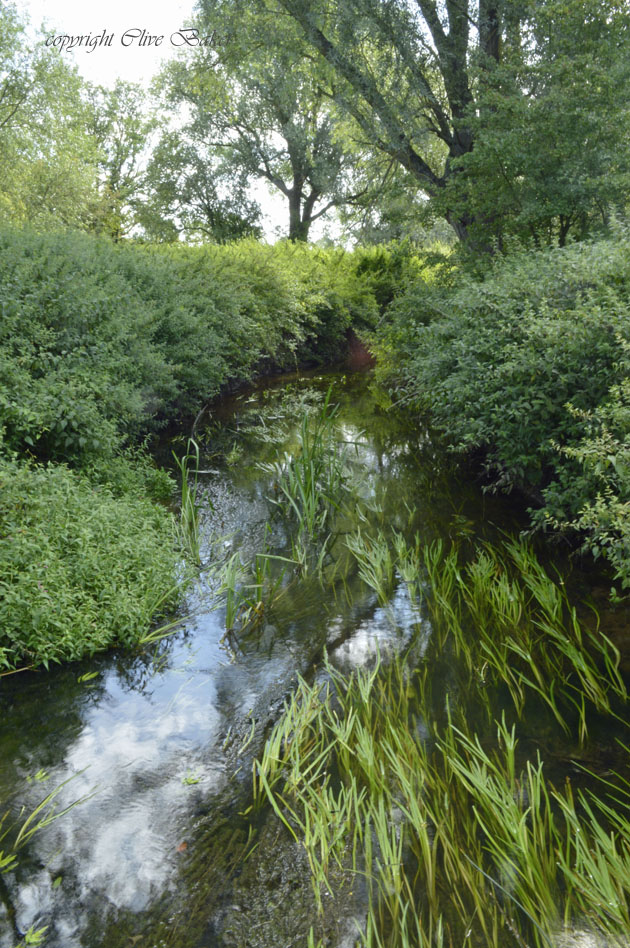
Fast flowing stream from the mill
On this last weekend of August there were lots of dragonflies and birds along the river as well as other walkers enjoying the blue skies and warmth of a Summer day in this hidden gem of East Anglian countryside another image to capture in the mind for reflection to think about on a grey and damp Bank holiday Monday to come.

Walking along the river Great Ouse to St Ives
Back from my Suffolk
A long overdue blog and a week spent on the Suffolk coast have made me sit down and share some more East Anglian images.
Being an East Anglian I love all things about the region, but my heart will always be in the area I was born, the Suffolk coast.
My family had not always in that area but I have to thank my Great Grandfather James Baker for moving there in the late 1800’s followed soon after by his parents (my great, great Grandfather and Grandmother) to Pakefield from Mendham on the Norfolk / Suffolk border some 26 miles in land, being agricultural workers manual labour on the land was fast becoming hard to find at this time so James became a fisherman at a young age, in the census of April 1881 he was on board the fishing vessel ‘Sensation’ on the South coast, he would have been around the age of 14 or 15 then.
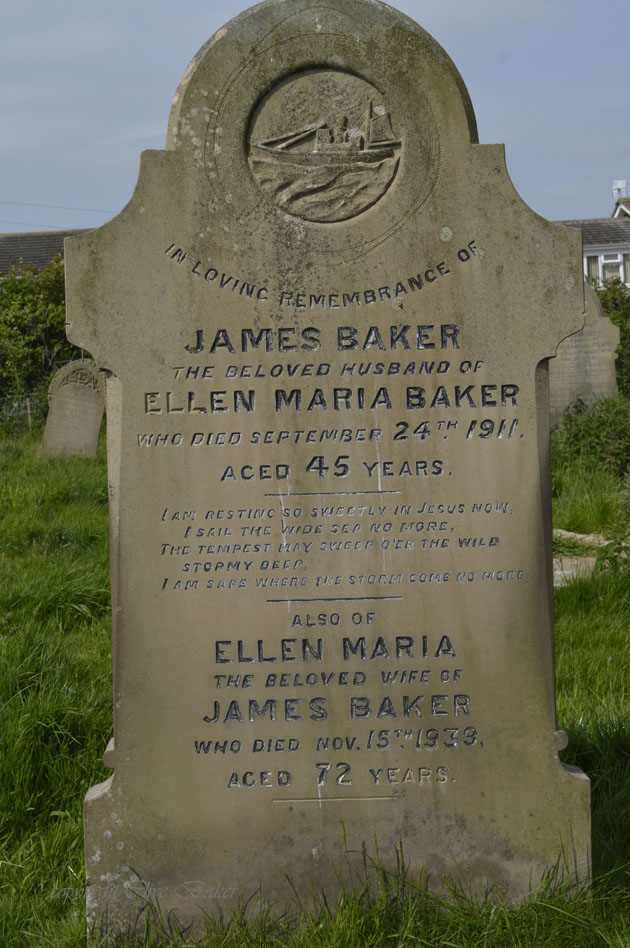
My Great grandfather’s headstone, the inscription reads ‘ I am resting so sweetly in Jesus now, I sail the wide sea no more, The tempest may sweep o’er the wild stormy deep, I am safe where the storm come no more. ‘
Every morning whilst staying in my caravan at Kessingland I would walk the dog along the beach to Benacre armed with my camera and my binoculars, I was lucky enough to see quite a few birds including a black redstart on the roof of a house near the beach. I would also see fellow dog walkers some I could tell were local some on holiday like myself, but after a few days I guess I was becoming a familiar sight with my dog, camera and binoculars always looking along the shoreline, out to sea or on the beach for wildlife or another image to take.
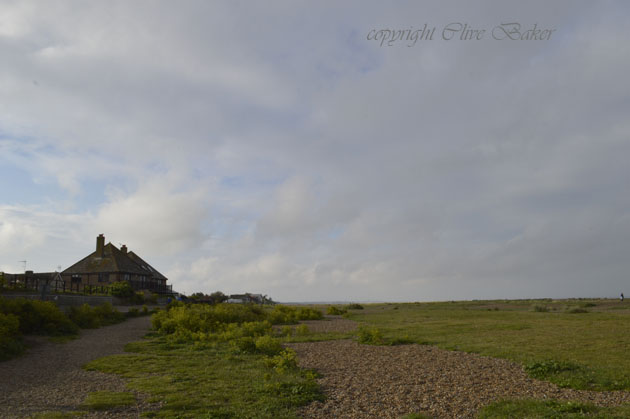
The first house in this image is where is where I saw the black redstart and as I was to find out later the houses are known as the ‘Twin peaks’ by the locals.
My last morning here was Saturday so I was up early determined to get one last walk in along the beach before packing up to drive home and it was this morning one of the locals stopped to talk to me as I was walking along the shoreline, he ‘spied’ the binoculars and asked if I had seen anything of interest, I told him I had seen the black redstart last Sunday on the roof of that house over there and pointed back over the beach at one of a pair of houses on the beach edge “Oh Twin peaks” he replied and as he detected I had a Lowestoft accent he obviously felt safe to tell me all the local birding knowledge, so as his black labrador dog sat on my left foot I then knew all about this local who until now had been on nodding terms.
It turned out he was also a fellow ‘birder’ but old age means when he is out walking he missed most birds as he stooped and as he said to me “I see more of my feet than I do birds” plus it is no good him having binoculars as his “Bloody hands shake all the time and everything would be a blur”, but he told me he lives up on the cliffs and has built a hut where he has his telescope and he looks out to see at the birds and then reeled of everything he sees from there, passage birds like spoonbill and bee eater, shearwater, great skua, the terns and the gulls, we talked about where I was born and where I live now, he asked about the birds I see in the fens and after a while we said our goodbyes.
As I watched him walk along the beach and the blood slowly returned to my left foot as his labrador had now followed him I realised why I love this region so much, the countryside and the people always so welcoming.
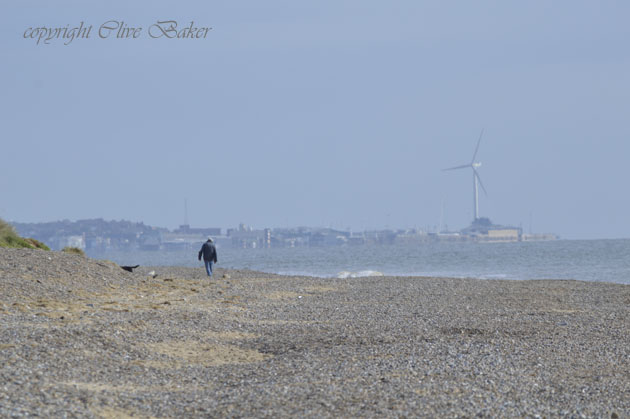
The fellow ‘birder’ and his dog walking back along the beach leaving me and my left foot with a warm feeling.
Swifts, Swallows and Martins
This weekend I have had my eyes to the sky looking for the last of our regular summer visitors that always fill the skies of East Anglia, I had already seen my first Swallow and House martin on the 11th of April now I am waiting for my first Swift.
There have already been sightings of a few birds this last weekend but I still have to see one myself, last year I saw my first one on May 5th the previous year April 27th so I am due my first sighting any time now, whilst the blackbirds in the garden are already feeding their first broods the Swallows, martins and Swifts have yet to mate, make nests and raise their young before the long journey back to Africa.
The swifts will be the last to arrive and the first to depart, studies have found that some young will be on the wing for nearly two years before landing and breeding , they ‘power nap’ in the air. soon our warm summer days will be filled with the sound of Screaming swifts around the roofs of houses along with the martins, and swallows skimming low over the surface of ponds and rivers, but before then they need to rest and feed up after the long journey to our shores.
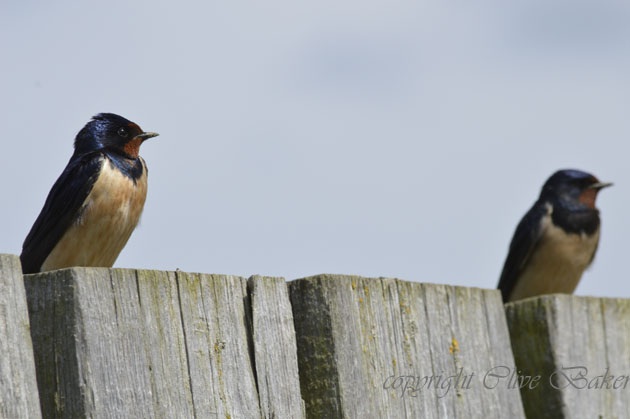
Two swallows at WWT Welney, Norfolk
Sight and Sound of the fen
This weekend I decided to take a walk over Wicken fen, Saturday afternoon was windy but bright parking at Upware I walked along Burwell Lode where swallows were feeding along with Common terns over the footbridge we turned left to walk along Wicken Lode where Reed buntings and Reed warblers were calling half way along Wicken Lode we saw our first Hobby of the year as we stood and watched we soon discovered there were four hunting, catching large flying insects and feeding on the wing.

Hobby hunting over Wicken Fen
I am guessing the hobby’s had followed the house martins from Africa as there appeared to be a lot of house martins flying high above us as well.
As we walked around on our loop of Wicken fen we also heard cetti’s and willow warblers some of the willow warblers we saw but the cetti’s warbler is hard to see but it’s song is unmistakable as it is a long short burst of repetitive notes.
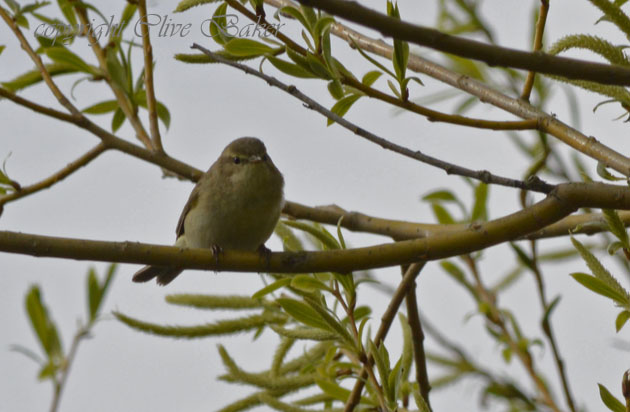
Willow Warbler
We were also lucky to see a Great White Egret on Baker’s fen almost double the size of the little egrets that were also there, but further along we heard in the distance our first cuckoo calling, had this like the hobby and house martins just arrived from Africa?.
As we made our way back along Wicken Lode I heard the unmistakable call of a nightingale very loud and very close, this bird will be low in the vegetation but very hard to see, we scanned the thickets as it sang its tropical like song, but we could not see it, we picked up other birds that we did not know were there, male blackcap, chaffinch but no nightingale was showing, reluctantly we left after 20 minutes to leave the song of the nightingale to any other person who may walk by.
Sunday Morning although dawned grey the wind had dropped so maybe this was a chance to go back to Wicken Fen and see if I could locate or at least record the Nightingale.
Parking at Upware again I noticed there were more Swallows, feeding around the sluice gates and recovering on the overhead wires after their long migration to the UK

Swallows recovering after their long migration from Africa
As I approached Wicken Load I could hear two cuckoo’s calling, one male and a female replying, soon I saw them chasing one another around the trees, then all around there seemed to be at least four calling maybe these had arrived since yesterday, then they were joined by the nightingale which seemed further away that yesterday but in the same area all around I could hear cetti’s warbler, chiffchaff, sedge warbler and reed bunting.
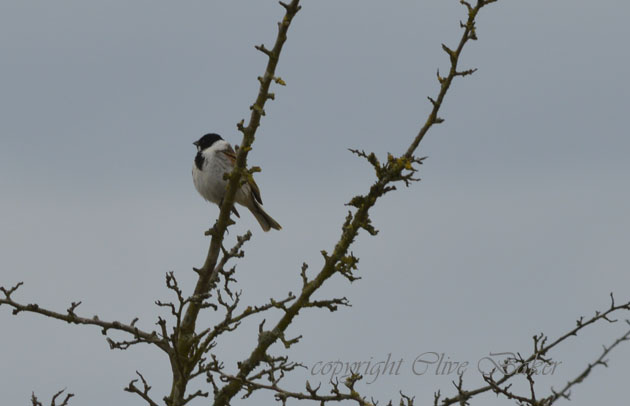
Male reed bunting calling from a hawthorn
The reed bunting was calling from a hawthorn and below him the sedge warblers called from the reeds and as they seemed to get louder looked for a higher perch at the top of the reeds or in the lower branch of a thicket.
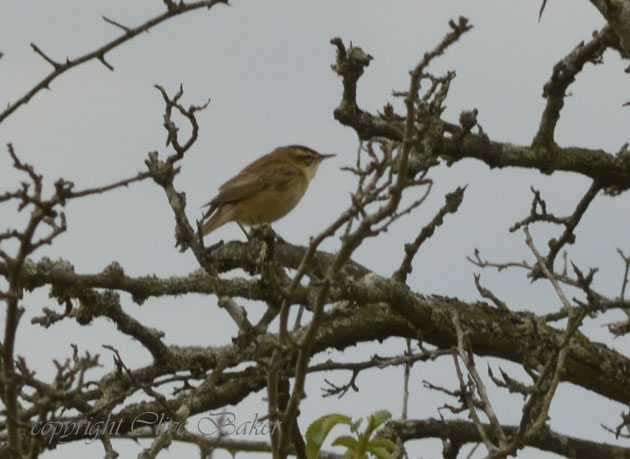
Sedge warbler
I managed to work out how to use my new digital recorder and tried to capture some of the sounds of Wicken fen. All I need to do now is work out how I can share my recordings but for now here is what a nightingale song sounds like,
and for the record I think it was a robin that was singing in Berkley Square not a nightingale.
The Bees are Buzzing
A few days ago I noticed a queen bumblebee was going in to my compost heap, she would have spent the winter hibernating in an old mouse hole and would have emerged in early Spring to start collecting nectar and pollen from the first flowers she could find.
Once she has found a suitable nest site she will start laying eggs and collecting nectar and to feed the larve the first of which will become workers. these will take over the task of collecting the nectar and pollen whilst the Queen remains in the nest and basically becomes an egg laying machine to expand the colony.
All of these first workers are females but will be infertile, later in the season she will start to lay male worker larve and fertile females which will become future queens which mate with these male workers.
The infertile female and the male workers will all die in this first year but the new queen bees will carry on the cycle to hibernate and emerge the following Spring to lay the fertile eggs they have had since this Summer so completing the cycle, it is these Queens that will only live for two years.

White-tailed Bumblebee
This is the time of year I get my Bee books out as I have to remind myself on the identification features of each bumblebee, as there are 24 species of Bumblebee in the UK, add to that the difference between the females and males then it can get quite tricky. first of all the Large bees are going to be queens, the smaller ones the workers, so this time of year the workers are going to be females also being early in the season there are going to be some bees that have not yet emerged, so I can safely say that today I have seen a aptly named ‘Red-tailed bumblebee’ worker as it was small with an orange bottom and completely black body being a female (the other red bottomed one is the Early bumblebee but this has yellow stripes on the body). The bumblebee I saw in the garden was the Buff-tailed this time a queen as it was large, can be confused with the White-tailed bumblebee but the tail on the Buff-tailed can be anything from a dirty white to buff and sometimes can be an orange red.
So all in all it can be very confusing so I would say get yourself a good book or maybe even join the BBCT as you will get some very good information to help.
The easy bumblebee to Identify is the Tree Bumblebee the only one that is ‘Ginger, black white’. I will not mention the Bee fly
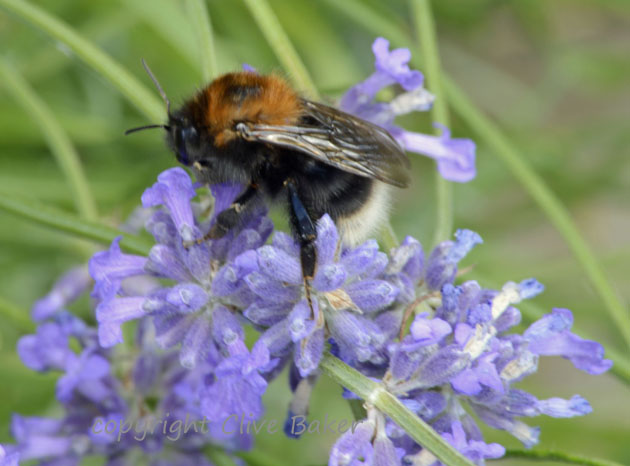
Tree bumblebee
East Anglia a region of variety
I have just spent a few days in North Norfolk and whilst there it confirmed to me what a great part of the British Isles we have here not only for living and working but also for pastimes.
For example the wildlife and in particular the bird life.
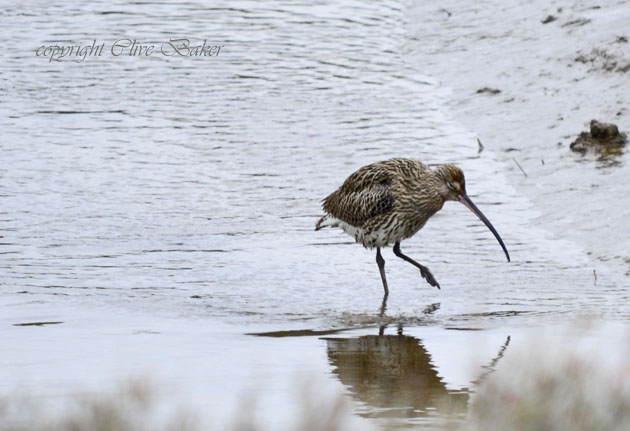
Curlew at RSPB Ticthwell, North Norfolk
there are a number of nature reserves all over East Anglia and North Norfolk is one of the hot spots for seeing wading birds, with the RSPB reserves at Titchwell and Snettisham.
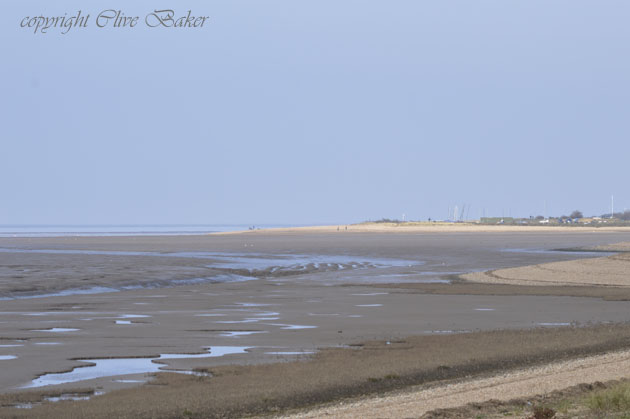
The Beach at Snettisham, a hotspot for seeing large flocks of wading birds.
Not only are there vast beaches but also woodland that attract walkers all year round and also sports events like Orienteering, sometimes these woods can be magical at first light all the more so in spring when they echo with birdsong.

First light on a spring morning in woodland at Sandringham
It is not only the people who live or visit the region that enjoy it but the animals they bring with them, horses and dogs love the freedom of the beach and the many footpaths.
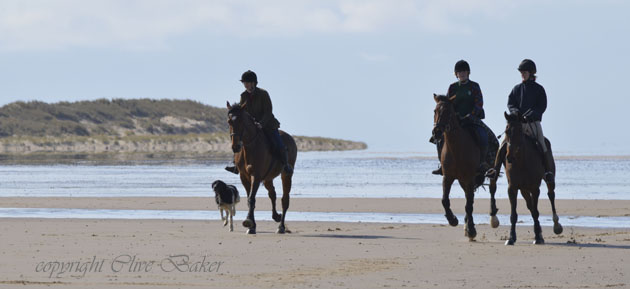
Horse riders and pet dog gallop on Holkham Beach
From beach to woodland, there are many places in our region to enjoy at a gallop or just an easy walk, if paradise was East Anglia I would go tomorrow.

A gentle walk on Holkham beach, Norfolk
Spring in my step
Unfortunately my website blog has had to take a back seat these last few weeks due to my wife having an accident, so family life has been priority these last 4 weeks, she is recovering well and I feel now we are into Spring and we have had a few warm sunny days this has helped her recovery and lifted not only hers but everybody’s spirits.
You only have to walk in the East Anglian countryside at the moment at any time of the day and the birds are singing (I heard my first chiffchaff today) and flowers are opening, blossom is out on the trees and I have even seen hawthorn leaves starting to open.
In the spare hours I have had I managed to get out and take some images, so I shall share a couple here today.
But as a warning in about the weather we are not quite out of the woods yet, I can see in my copy of the book ‘ The Carlton Colville Chronicles of Canon Reginald Austus Bignold ‘ the Canon had entered ” March 19th 1915 It has been snowing heavily for twenty-four hours “, Well 100 years ago it may have been but you never know.

The seeds of a plane tree against the Spring sky
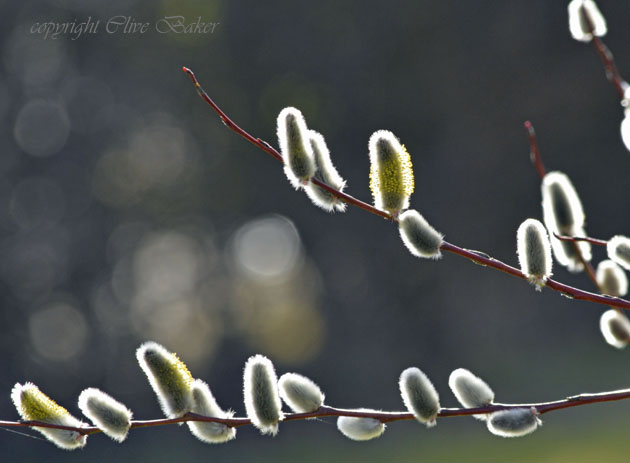
Catkins of the pussy willow

Reedmace often called bulrush by mistake

Male Blackbird one of the many birds singing early in the mornings in Spring.
Pictures speak louder than words
Sometimes it is hard to explain in words why I as a person born in Suffolk and still living in East Anglia enjoys the East Anglian landscape so much, I know places in this small island can be dramatic and can make the heart sing in appreciation on the beauty of the mountains, lakes and dales not to mention the coastline, but it is here I feel most content traveling the Fens of Norfolk and Cambridgeshire, the Coast of Suffolk and Norfolk, breckland and broads we have it all.
It is a landscape that has changed many times over the years, but still has its magic as I hope these few images I took yesterday morning will show.
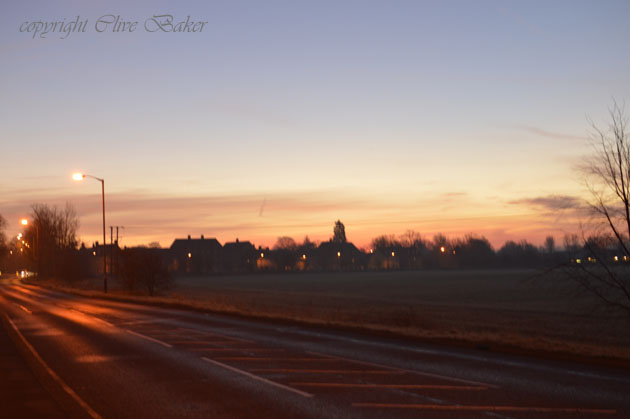
The dawn breaks in Ely, Cambridgeshire

These houses have seen quite a few sunrises in Ely, Cambridgeshire
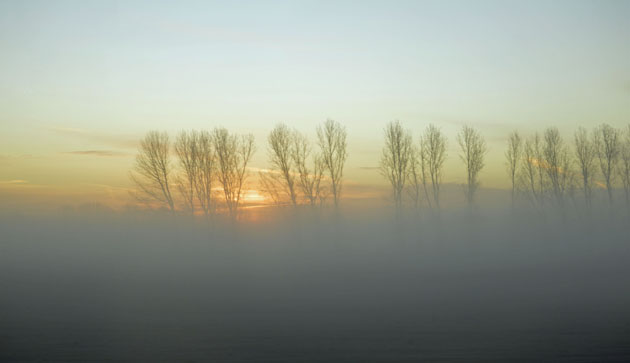
Trees in the early morning mist of the Cambridgeshire fens

The heat of the rising sun burns away the mist in the fens
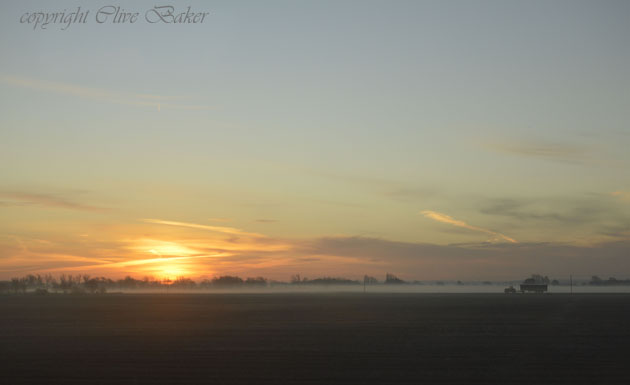
start of a working day as a farmer heads for a days work in the fields
The Spring Collection
This last weekend saw the East Anglian counties touched by the first taste of Spring, a Sunny day and warmth in the Sun not only brought out the sound of lawn mowers but sightings of Brimstone and Peacock butterflies, even the odd Queen bumblebee out of hibernation from the old mouse-hole where she would have spent the winter.
But if you have not heard it is the birds that are hailing that the days of Spring are on the way, Song thrush, Robin and Blackbird are the early risers singing their hearts out in the darkness before dawn to be joined by dunnock and wren as the sun creeps over the eastern counties.
And whilst many a bird watcher is waiting for the Spring migrants to arrive our own resident birds are displaying not only their fine voices but also how splendid they are looking in their plumage in a few months the chores of raising a family will leave them looking not so fine and dandy, but for now enjoy our wildlife as they prepare for Spring and as a taster here is just some of the birds displaying their Spring collection on natures ‘Catwalk’
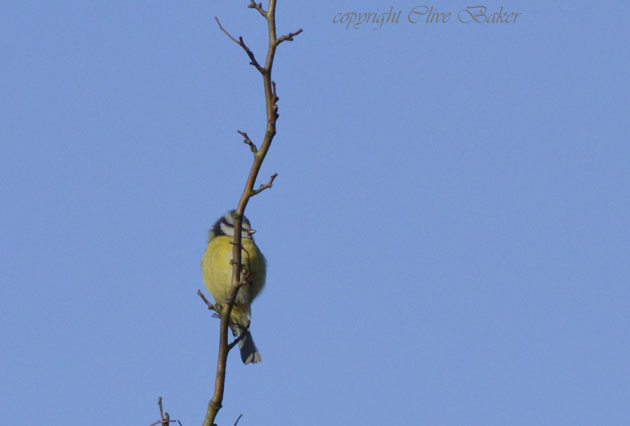
Blue tit
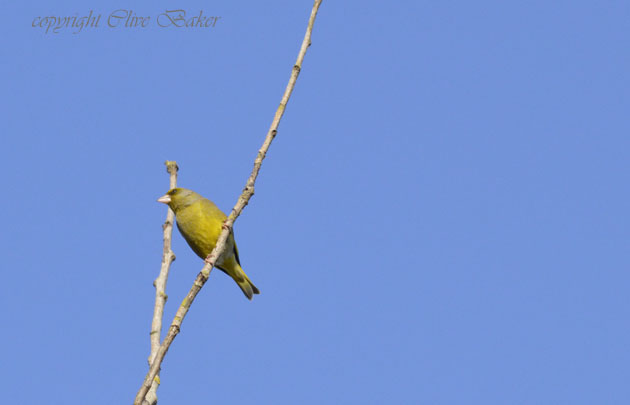
Greenfinch
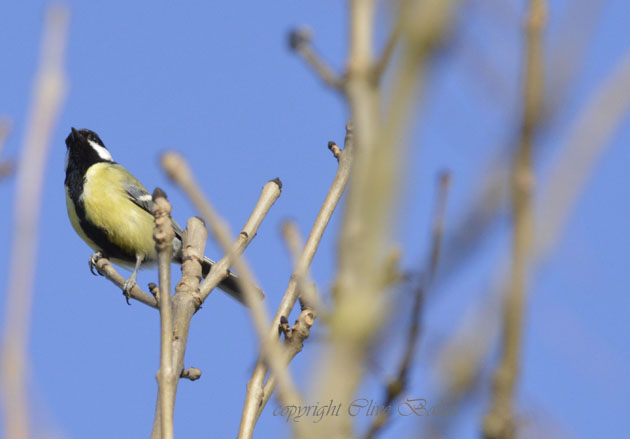
Great Tit

Robin
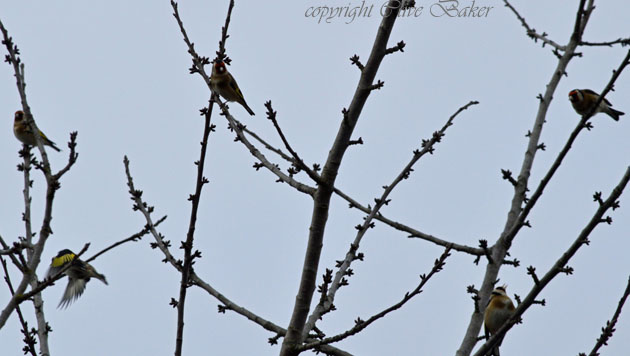
A charm of Goldfinches
 East Anglia the Wildlife, Landscape and People.